
Blog
Can You Repair a Boiler with Low Pressure? Causes and Warning Signs
Why boiler pressure drops
Low pressure does not always mean the boiler itself has failed. In a sealed central heating system, water circulates around the boiler, radiators and pipework. If water leaves that circuit, the pressure falls. The useful question is not only how to bring the reading back up, but what caused it to fall in the first place.
A single drop after radiator bleeding may have a straightforward explanation: releasing air can also reduce the amount of water in the system. If the pressure falls again without a clear reason, though, topping it up treats the reading rather than the fault. Repeatedly adding water can delay a proper diagnosis and allow the underlying problem to continue.
A leak somewhere in the heating circuit
Water can escape from a radiator valve, a joint, a section of pipework or another part of the heating circuit. A leak may leave a visible damp patch, staining, corrosion or a small amount of water around a valve. Not every leak is obvious: pipework can be concealed, and a small loss may take time to show itself.
If you can safely inspect accessible radiators and pipework, look for signs of moisture or staining. Do not remove boiler panels or disturb fittings to search for a leak. If you find water near electrical equipment, avoid touching it and seek appropriate help. A continued pressure drop needs investigation, even when you cannot see where the water is going.
A pressure-release valve or expansion vessel issue
Water expands as it heats. The expansion vessel is a part that makes room for water as it expands while the heating is running. If it is not working as intended, pressure can rise too much while the boiler is heating. A pressure relief valve may then release water to protect the system. Once the system cools, the reading can be lower than before.
This pattern matters because a low reading may be the result of pressure being lost during heating, rather than a one-off shortage of water. A heating engineer can assess the system and its components to establish what is happening. Do not try to adjust internal boiler parts yourself.
What you can check safely
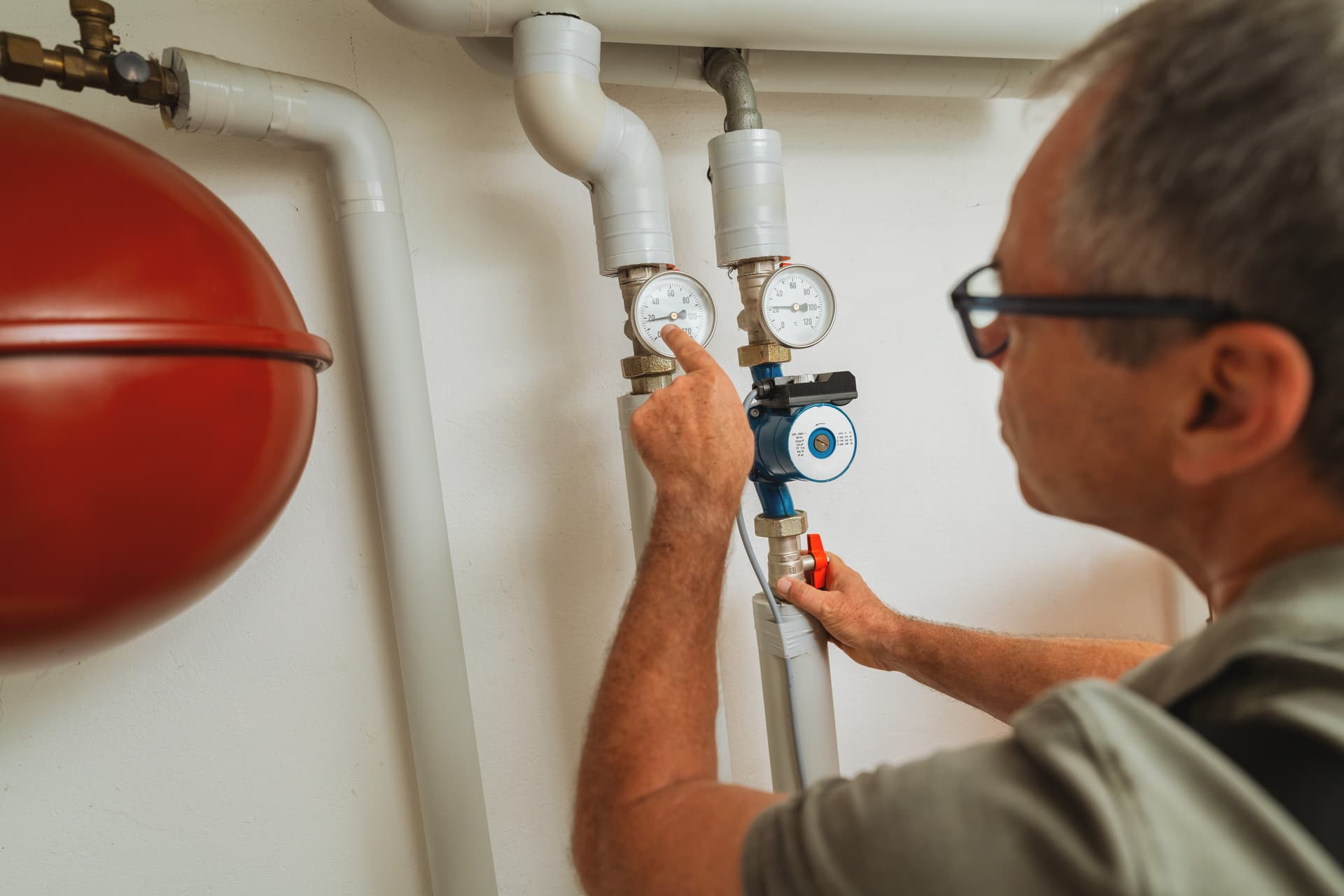
Start by looking at the boiler display or pressure gauge and note what it shows. Check the boiler manual for the operating range specified for your model, as readings and instructions can differ. Notice whether the pressure changes after the heating has run, whether you have recently bled radiators, and whether the reading keeps falling after it has been restored.
You can also look over accessible radiators and visible pipework for dampness, staining or signs of corrosion. These checks may help describe the problem, but they cannot confirm the cause. Avoid opening the boiler casing, working on gas components or repeatedly operating valves you cannot identify.
Some boiler manuals explain how to top up system pressure using the filling controls. Only consider that if your manual clearly identifies the correct process and you are confident you can follow it. If you are unsure, stop and ask a qualified heating engineer. If pressure drops again, the important next step is finding the reason, not continuing to refill the system.
Why leaving repeated pressure loss can cause more trouble
A boiler that cannot maintain its operating pressure may struggle to circulate water around the heating system. You might notice radiators heating unevenly, heating or hot water becoming unreliable, or the boiler stopping operation. These signs do not identify a single fault by themselves, so changing settings or repeatedly topping up may not resolve the cause.
A persistent leak can also affect nearby surfaces or concealed parts of a property before it becomes easy to spot. If a component is releasing water as the system heats, ignoring the pattern can allow the same cycle to continue. Recording the readings and symptoms gives an engineer useful information and helps distinguish a one-off pressure change from an ongoing loss.
Getting the cause checked
When we assess low pressure as part of boiler repair, the aim is to understand why the system is losing pressure before recommending corrective work. Tell us what the gauge shows, how often it drops, whether radiators have been bled and whether you have noticed visible water or staining. That history helps focus the investigation, but the system still needs to be assessed to identify the fault.
We serve North Weald Bassett, Epping, Bishop's Stortford, Chipping Ongar, Harlow, Theydon Bois and Loughton. For a wider overview of the service, see our Boiler Repair page. Here at HMS HEATING LTD, we can help you work out the next step when your boiler is losing pressure.